


Essential Employee Benefits for Small Businesses: A Complete Guide
- Jade Klem Carmona
- Apr 13
- 4 min read

Updated: Apr 30
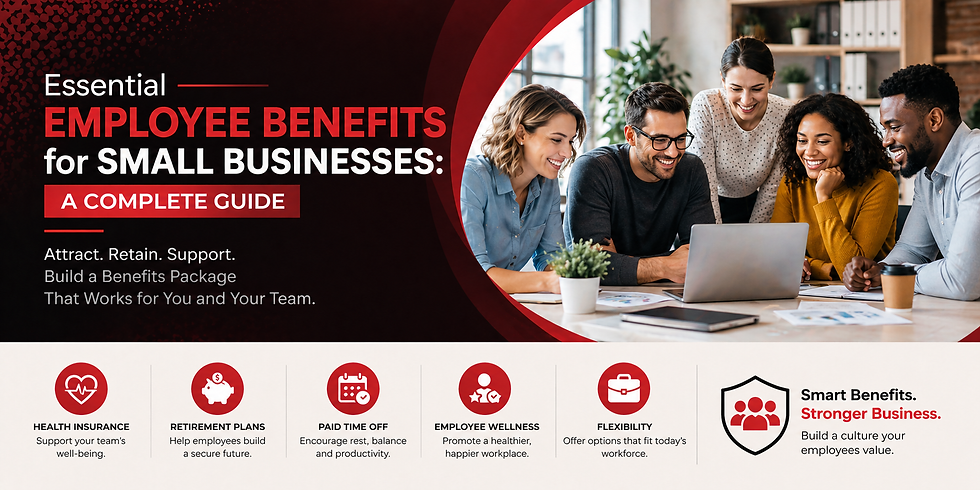
If you’re running a small business, you already know that attracting and keeping good employees is harder than ever. That’s where the right employee benefits for small businesses make a real difference.
We’ve worked with many small businesses that want to compete with larger companies, but don’t always know where to start when it comes to building a small business benefits package. The good news is, you don’t need a massive budget—you just need the right structure.
In this guide, we’ll walk you through the essential employee benefits for small businesses, why they matter, and how you can build a package that actually helps you attract and retain top talent while improving workplace morale.
Understanding Employee Benefits
Employee benefits are more than just “extras.” They are part of your total compensation strategy and a key factor in building competitive small business employee benefits.
When we talk to business owners, we often explain it this way: salary gets attention, but benefits build loyalty.
Employee benefits can include:
Health insurance
Retirement plans
Paid time off
Wellness programs
Employee assistance support
For small businesses, the goal isn’t to offer everything, it’s to offer the right mix of benefits for small businesses that support your team and your budget.
When done properly, benefits help you:
Reduce turnover
Improve employee satisfaction
Increase productivity
Strengthen your company culture
Why Employee Benefits Matter for Small Businesses
We’ve seen it repeatedly—small businesses that invest in employee benefits for small business employees consistently outperform those that don’t when it comes to retention.
Here’s why it matters: When employees feel supported, they don’t just stay longer, they perform better.
For small businesses, this is critical because replacing employees is expensive and time-consuming. A strong small business employee benefits package helps you compete with larger companies that may offer higher salaries but lack flexibility or culture.
Simply put, employee benefits are no longer optional—they’re a competitive advantage.
Key Types of Employee Benefits
Let’s break down the most important categories we recommend for building effective group employee benefits for small business teams.
Health Insurance Benefits
Health insurance is usually the foundation of any small business employee benefits plan.
Most small businesses choose between group health plans, SHOP marketplace options, or reimbursement-based solutions like HRAs.
The goal is simple: give employees access to care while managing your costs effectively. Affordable health insurance for small business employees is often the first step in building a competitive package.
Strong health benefits can also reduce absenteeism and improve overall productivity.
Financial & Retirement Benefits
Employees want to feel secure about their future, which is why retirement plans for small business employees are so valuable.
That’s why retirement plans like:
401(k)
SIMPLE IRA
SEP IRA
are essential components of a well-rounded small business benefits package.
Even small contributions or matching programs can significantly improve employee retention and satisfaction.
Paid Time Off (PTO)
We always remind employers, rest is part of productivity.
PTO includes:
Vacation days
Sick leave
Paid holidays
When employees have time to recharge, they come back more focused and engaged. Even flexible PTO policies can make a big difference for small teams looking to improve employee retention through benefits.
Flexible Work & Remote Options

Work is changing, and flexibility is now one of the most valued benefits in modern small business employee benefits strategies.
This can include:
Remote work options
Flexible schedules
Hybrid setups
Compressed workweeks
For many small businesses, this costs nothing but delivers huge value in employee satisfaction.
Employee Assistance Programs (EAPs)
EAPs give employees access to confidential support for:
Stress
Mental health
Financial concerns
Personal challenges
We often recommend EAPs because they improve both employee well-being and workplace performance, making them a valuable addition to any affordable employee benefits for small business plan.
Health Insurance Options for Small Businesses
One of the most common questions we get is: “What’s the best health insurance option for a small business?”
The truth is, it depends on your size, budget, and goals.
Common options include:
SHOP marketplace plans
Private group health insurance
HRAs (Health Reimbursement Arrangements)
HSAs (Health Savings Accounts)
Each option has different cost structures, but the goal is always the same: provide meaningful group health insurance plans for small businesses without overextending your budget.
Compliance and Legal Considerations
This is where many small businesses get stuck when managing employee benefits for small businesses.
Employee benefits come with compliance rules, including:
ACA requirements
HIPAA privacy rules
ERISA regulations
State-specific labor laws
We always recommend making sure your benefits are properly documented and structured to avoid compliance issues later on.
A small mistake here can lead to unnecessary penalties or lost tax advantages—especially when managing small business employee benefits programs.
How to Build a Competitive Benefits Package
There’s no “one-size-fits-all” approach to building employee benefits for small businesses.
What we usually guide employers to do is:
Start with core essentials (health + PTO)
Add retirement options
Layer in flexibility and wellness benefits
Adjust based on employee feedback and budget
The goal is not to copy big corporations, but to build a sustainable and competitive small business benefits package that helps you attract and retain employees.

Conclusion
The right employee benefits for small businesses can completely change how your business attracts, retains, and supports employees.
You don’t need the biggest budget—you just need a smart, well-structured approach to your small business employee benefits strategy.
If you’re a small business looking to improve your employee benefits strategy, start with the essentials and build from there. Over time, the impact on retention, morale, and productivity is significant.


Comments