


GLP-1 Medications: What Employers Need to Know About Coverage and Costs

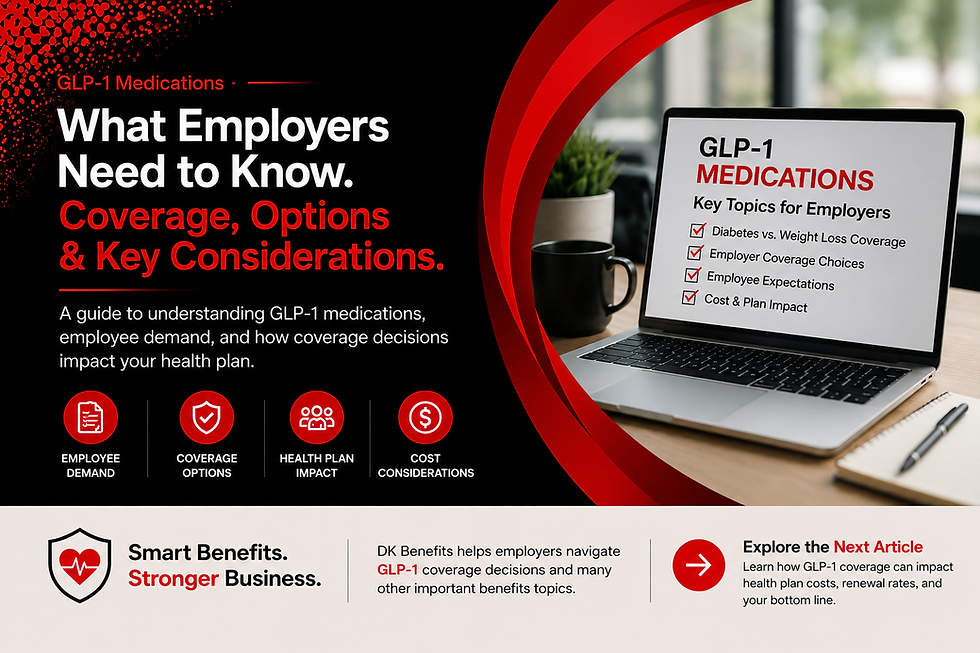
GLP-1 medications have quickly become one of the most talked-about topics in healthcare and employee benefits. Originally developed to help individuals manage Type 2 diabetes, these medications have gained widespread attention for their effectiveness in supporting weight loss and improving overall health outcomes.
As more employees hear about GLP-1 medications through television commercials, social media, and news coverage, employers are increasingly receiving questions about whether these drugs are covered under their health plans. While the potential health benefits are significant, employers must also consider the financial impact of offering coverage.
Understanding what GLP-1 medications are, who they are designed for, and how they may affect group health plans can help employers make informed benefits decisions.
What Are GLP-1 Medications?
GLP-1 stands for glucagon-like peptide-1, a hormone naturally produced in the body that helps regulate blood sugar levels and appetite. GLP-1 medications mimic this hormone, helping individuals feel fuller longer, reduce food intake, and better manage blood sugar levels.
These medications were initially developed to treat Type 2 diabetes but have since become widely used for weight management in individuals who meet specific medical criteria.
Some of the most recognized GLP-1 medications include:
Ozempic®
Wegovy®
Mounjaro®
Zepbound®
While each medication works slightly differently, they generally help patients improve blood sugar control, reduce appetite, and support sustainable weight loss when combined with healthy lifestyle changes.
Who Are GLP-1 Medications Designed For?

Not everyone is a candidate for GLP-1 therapy. These medications are intended for individuals who meet certain medical requirements and should only be prescribed by a licensed healthcare provider.
Individuals with Type 2 Diabetes
Many GLP-1 medications were originally approved to help manage Type 2 diabetes. They can improve blood sugar control and may help reduce the risk of diabetes-related complications.
Individuals with Obesity or Weight-Related Health Conditions
Certain GLP-1 medications have received FDA approval for chronic weight management. Patients typically must meet specific body mass index (BMI) requirements or have related health conditions such as hypertension, sleep apnea, or cardiovascular disease.
Individuals at Risk for Chronic Health Issues
For some patients, weight loss and improved metabolic health can reduce the risk of future health complications. Healthcare providers evaluate each patient's medical history before determining whether GLP-1 therapy is appropriate.
Why Are Employees Asking About GLP-1 Coverage?
Employers may notice an increase in employee questions regarding GLP-1 medications, and much of this growing interest is driven by consumer awareness.
Direct-to-Consumer Advertising
Television commercials, online advertisements, and social media campaigns have made medications such as Ozempic and Wegovy household names. Employees often see these advertisements and become interested in learning whether the medications may benefit them.
Success Stories and Public Attention
Weight loss transformations and positive health outcomes shared through media outlets and social platforms have further increased public interest. Many individuals are now more aware of treatment options than ever before.
Greater Focus on Health and Wellness
Employees are increasingly proactive about their healthcare decisions. As people seek solutions for weight management and chronic health conditions, they naturally turn to their employer-sponsored health plans to understand available coverage options.
Understanding Employer Coverage Choices for GLP-1 Medications

One of the biggest misconceptions surrounding GLP-1 medications is that if a drug is approved by a doctor, it will automatically be covered by health insurance. In reality, employer-sponsored health plans often have significant flexibility in determining how these medications are covered.
Coverage for Diabetes and Weight Loss Are Not Always the Same
Historically, most employer discussions surrounding GLP-1 medications focused on diabetes treatment. Today, the growing popularity of GLP-1 medications for weight management has created new coverage decisions for employers and health plans.
However, the conversation has evolved as newer GLP-1 medications have gained popularity for weight management. Medications such as Zepbound® and Wegovy® are widely advertised for weight loss, leading many employees to assume that coverage is automatic. In many cases, it is not.
Some employer health plans may cover GLP-1 medications when prescribed for diabetes but exclude or limit coverage when the same class of drugs is prescribed primarily for weight loss. The specific coverage available often depends on the employer's plan design and the insurance carrier's offerings.
Employers May Have Different Coverage Options
Depending on the insurance carrier and health plan structure, employers may have options regarding how GLP-1 medications are covered.
For example, some plans may:
Cover GLP-1 medications for Type 2 diabetes treatment only
Offer optional coverage for weight-loss medications
Require prior authorization before coverage is approved
Apply medical necessity guidelines and eligibility requirements
Limit coverage to specific medications within the GLP-1 category
Because these medications can represent a significant pharmacy expense, employers often evaluate both employee demand and long-term financial impact before expanding coverage.
Why Employees Are Often Confused About Coverage
Direct-to-consumer advertising has played a major role in the popularity of GLP-1 medications. Television commercials frequently highlight low out-of-pocket costs, manufacturer savings programs, and dramatic weight-loss results.
While these advertisements can increase awareness, they do not necessarily reflect how an individual's employer-sponsored health plan is designed. Coverage, eligibility requirements, prior authorization rules, and employee costs can vary significantly from one plan to another.
As a result, employees may request a specific medication after seeing an advertisement, only to discover that coverage is subject to plan limitations or medical review.
The Importance of Physician Guidance
As public interest in GLP-1 medications continues to grow, healthcare providers remain the most important resource for determining whether treatment is appropriate.
While advertisements may encourage patients to ask about specific medications, treatment decisions should be based on medical history, health conditions, treatment goals, and professional clinical judgment. Physicians can help patients understand whether a GLP-1 medication is suitable and what alternatives may be available.
For employers, understanding the distinction between consumer demand and medical necessity is an important part of evaluating coverage decisions and managing healthcare costs responsibly.
Potential Benefits of GLP-1 Coverage for Employers
Employers considering GLP-1 coverage may find several potential advantages.
Improved Employee Health
Employees who successfully manage chronic conditions such as diabetes or obesity may experience better overall health and quality of life.
Increased Productivity
Healthier employees often experience fewer health-related disruptions, which may contribute to improved workplace productivity and attendance.
Enhanced Employee Satisfaction
Offering comprehensive health benefits can help employees feel supported and valued. As demand for GLP-1 medications continues to grow, coverage may become an increasingly important component of a competitive benefits package.
Support for Long-Term Wellness Goals
Many employers invest in wellness initiatives designed to improve employee health. GLP-1 medications may complement broader wellness strategies when used appropriately and under medical supervision.
Challenges Employers Should Consider
Although GLP-1 medications offer potential benefits, employers must carefully evaluate the associated costs.
High Prescription Costs
GLP-1 medications can be among the most expensive prescriptions covered under a health plan. Depending on utilization, pharmacy spending may increase significantly.
Ongoing Treatment Requirements
Many patients remain on these medications for extended periods. Employers should consider the long-term financial implications of sustained usage.
Impact on Health Plan Expenses
Increased utilization of high-cost medications may affect overall healthcare spending and potentially influence future plan costs.
Because every workforce is different, there is no universal answer regarding whether GLP-1 coverage makes sense for a particular employer.
How a Benefits Broker Can Help
Evaluating GLP-1 coverage involves more than simply deciding whether to include a medication on a plan.
An experienced benefits broker can help employers:
Review workforce demographics and healthcare needs
Compare carrier coverage options
Understand cost implications and utilization trends
Evaluate plan design alternatives
Balance employee expectations with budget considerations
A strategic approach can help employers make informed decisions that align with both organizational goals and employee needs.
Conclusion
GLP-1 medications have become one of the most discussed topics in healthcare and employee benefits. While these medications offer promising health outcomes for many individuals, employers must carefully evaluate both the potential benefits and financial impact of coverage.
As employee interest continues to grow, organizations that understand how GLP-1 medications fit into their overall benefits strategy will be better positioned to make informed decisions.
At DK Benefits, we help employers evaluate health plan options, understand emerging benefits trends, and develop cost-effective strategies that support both employees and business objectives. If you're considering GLP-1 coverage or reviewing your current benefits package, our team can help you navigate the options with confidence.


Comments