


HMO vs PPO Plans: Costs, Coverage, and How to Choose the Best Option
- Jade Klem Carmona
- Apr 7
- 5 min read

Updated: Apr 30
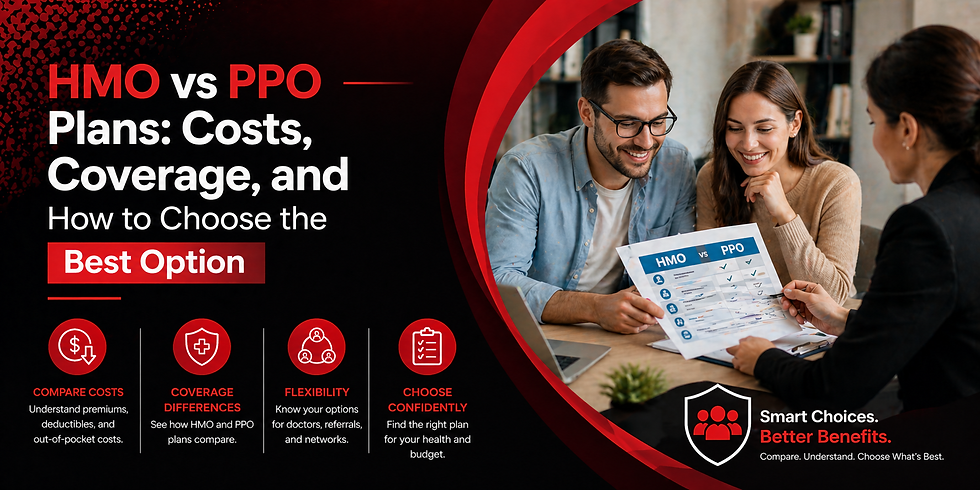
Choosing the right health insurance can be confusing, especially when comparing HMO vs PPO plans. Both options help cover medical costs, but they differ in flexibility, provider access, and overall expenses. Many people ask, what is an HMO plan and what is a PPO plan, and which one is the better choice.
An HMO plan typically requires you to stay within a network and get referrals for specialists, often at lower costs. A PPO plan offers more flexibility, allowing out-of-network care without referrals, but usually comes with higher premiums. Understanding these differences can help you choose the plan that best fits your needs and budget.
What Is an HMO Plan?
An HMO (Health Maintenance Organization) plan is a type of health insurance that requires members to receive care from doctors and hospitals within a specific network. With this plan, you typically choose a primary care physician (PCP) who manages your healthcare and provides referrals if you need to see a specialist.
HMO plans are known for their lower premiums and out-of-pocket costs, making them a cost-effective option for many individuals and families. However, they offer less flexibility since services are generally only covered within the network, except in emergencies. This structure works best for those who are comfortable with coordinated care and want to keep healthcare expenses predictable.
What Is a PPO Plan?
A PPO (Preferred Provider Organization) plan is a type of health insurance that offers greater flexibility in how you receive care. Unlike an HMO, you are not required to choose a primary care physician, and you can see specialists without needing a referral.
PPO plans allow you to visit both in-network and out-of-network providers. While you’ll pay less when using in-network doctors, the plan still covers a portion of costs if you go outside the network—though at a higher out-of-pocket expense. Because of this flexibility and convenience, PPO plans typically come with higher premiums. They are a good option for individuals who want more control over their healthcare choices.
HMO vs PPO Plans: Key Differences
When comparing HMO vs PPO plans, the main differences come down to cost, flexibility, and how you access care. HMO plans are generally more affordable, but they require you to stay within a network and get referrals for specialists. PPO plans, on the other hand, offer more freedom to choose providers and see specialists without referrals, but usually at a higher cost.
Here’s a quick comparison:
Network Flexibility:
HMO plans require in-network providers only, while PPO plans allow both in-network and out-of-network care.
Referrals:
HMO plans require referrals from a primary care doctor to see specialists. PPO plans do not require referrals.
Costs:
HMO plans typically have lower premiums and out-of-pocket costs. PPO plans usually have higher premiums and may involve higher costs for out-of-network care.
Primary Care Physician (PCP):
HMO plans require you to choose a PCP. PPO plans do not.
Understanding these key differences can help you decide which plan aligns better with your healthcare needs and budget.
HMO vs PPO Plans: Pros and Cons

Both HMO and PPO plans have advantages and disadvantages, and the right choice depends on your healthcare needs and budget.
Pros of HMO Plans
HMO plans are generally more affordable, with lower monthly premiums and out-of-pocket costs. They also provide coordinated care through a primary care physician, which can make managing healthcare simpler and more organized.
Cons of HMO Plans
The main limitation is flexibility. You must stay within the network for coverage and usually need referrals to see specialists, which can delay access to care.
Pros of PPO Plans
PPO plans offer greater freedom. You can see specialists without referrals and visit out-of-network providers if needed. This flexibility is ideal for those who want more control over their healthcare choices.
Cons of PPO Plans
PPO plans typically come with higher premiums and higher costs when using out-of-network services.
HMO vs PPO Plans: Cost Comparison
When comparing HMO vs PPO plans, cost is often one of the biggest deciding factors. HMO plans are usually more budget-friendly, with lower monthly premiums and reduced out-of-pocket expenses. This makes them appealing for individuals or families who want predictable healthcare costs and are comfortable staying within a network.
PPO plans, on the other hand, tend to have higher monthly premiums. However, they offer more flexibility, especially if you need to see out-of-network providers. While in-network care is still more affordable, PPO plans may result in higher overall spending depending on how often you use healthcare services outside the network.
In short, HMO plans focus on cost savings, while PPO plans prioritize flexibility at a higher price point.
How to Choose Between HMO vs PPO Plans
Choosing between HMO vs PPO plans depends on your healthcare needs, budget, and how much flexibility you want when seeing doctors.
If you prefer lower costs and don’t mind staying within a network, an HMO plan may be a good fit. It works well for individuals or families who are comfortable having a primary care doctor manage their care and coordinate specialist visits through referrals.
On the other hand, if you want more freedom to choose providers or see specialists without referrals, a PPO plan may be better. It’s ideal for those who are willing to pay higher premiums in exchange for flexibility, including the option to go out of network when needed.
Ultimately, the best choice depends on balancing affordability with access to care.
HMO vs PPO Plans for Small Businesses
For employers, choosing between HMO vs PPO plans is often about balancing cost control with employee satisfaction. HMO plans are typically more affordable, making them a strong option for small businesses that want to manage healthcare expenses. Since care is coordinated through a primary care physician and stays within a network, costs are usually more predictable.
PPO plans, however, offer employees more flexibility. They can see specialists without referrals and access out-of-network providers when needed. This added freedom often comes with higher premiums, but it can improve employee satisfaction and retention.
Many employers consider both options carefully to ensure their group employee benefits meet both budget requirements and workforce needs.

Conclusion
Both HMO and PPO plans offer valuable ways to manage healthcare costs, but they serve different needs. HMO plans are generally more affordable and work well for individuals who are comfortable staying within a network and having a primary care doctor coordinate their care. PPO plans, on the other hand, provide more flexibility, allowing access to specialists without referrals and coverage for out-of-network providers at a higher cost.
Understanding the key differences in HMO vs PPO plans can help you make a more informed decision based on your budget, healthcare needs, and preferred level of flexibility.
FAQ
What is an HMO plan?
An HMO (Health Maintenance Organization) plan is a type of health insurance that requires members to use in-network doctors and hospitals. A primary care physician usually manages care and provides referrals to specialists.
What is a PPO plan?
A PPO (Preferred Provider Organization) plan offers more flexibility, allowing members to see both in-network and out-of-network providers without needing referrals, though out-of-network care costs more.
Which is better: HMO or PPO?
It depends on your needs. HMO plans are more affordable and structured, while PPO plans offer greater flexibility but usually come with higher costs.
Can I see a specialist without a referral?
Not with an HMO plan—you usually need a referral. With a PPO plan, you can see specialists directly.
Does PPO cover out-of-network care?
Yes, PPO plans provide partial coverage for out-of-network services, but at a higher out-of-pocket cost.


Comments