


Open Enrollment Checklist for Employers: How to Prepare for a Successful Benefits Period

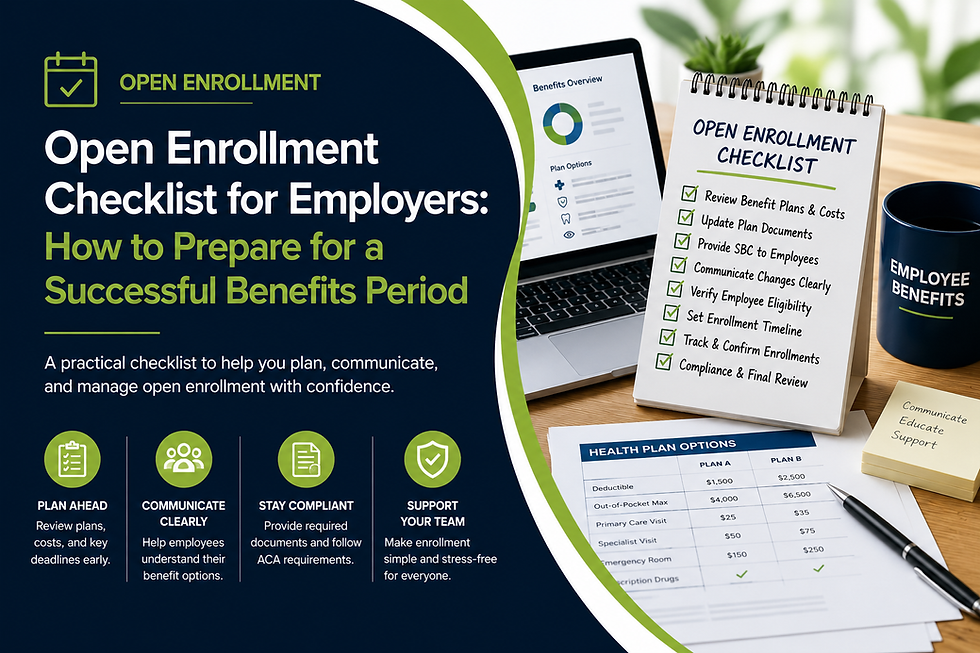
Open enrollment is one of the most important times of the year for employers offering health insurance benefits.
During this period, employees review their coverage options, make benefit elections, and decide whether their current health plan still meets their needs.
For employers, open enrollment involves much more than simply sending employees a renewal notice. It requires careful planning, communication, and compliance management to ensure employees have the information they need to make informed decisions.
A well-organized open enrollment checklist for employers can help businesses avoid missed deadlines, improve employee understanding, and create a smoother benefits experience.
What Is Open Enrollment?
Open enrollment is a designated period when employees can enroll in, change, or decline certain employer-sponsored benefits, including health insurance coverage.
During open enrollment, employees typically have the opportunity to:
Select a health insurance plan
Add or remove dependents
Review updated plan costs
Compare coverage options
Update benefit elections
For employers, this is also the time to review plan changes, communicate updates, and ensure required documents are provided.
Employer Open Enrollment Checklist
Preparing early can make the entire process easier for both employers and employees.
Below are key steps businesses should consider before each benefits enrollment period.
1. Review Your Current Health Plan and Renewal Information
Before announcing open enrollment, employers should carefully review their current health insurance plan.
Important items to evaluate include:
Premium changes
Deductible adjustments
Changes to covered benefits
Provider network updates
Prescription coverage changes
Employee contribution amounts
Healthcare costs and plan designs often change each year. Reviewing these updates early allows employers to prepare accurate communications and determine whether plan adjustments are needed.
Working with an employee benefits broker can help employers compare available options and understand how changes may impact both the business and employees.
2. Confirm Employee Eligibility and Enrollment Information
Accurate employee information is essential for a successful open enrollment period.
Employers should verify:
Eligible employees
Dependent information
Employment status changes
New hires approaching eligibility
Employees who may need updated enrollment instructions
Incorrect employee information can create enrollment issues and delays with insurance carriers.
3. Provide Employees With Required Benefits Documents
One of the most important parts of open enrollment is making sure employees receive the information required to understand their health plan options.
This includes providing the Summary of Benefits and Coverage (SBC).
The SBC is a standardized document that explains important health plan details, including:
Deductibles
Out-of-pocket maximums
Copayments
Coinsurance
Covered healthcare services
Coverage limitations
The purpose of the SBC is to help employees compare plans using consistent information.
While insurance carriers typically prepare the SBC, employers are responsible for ensuring employees receive it within the required timeframe.
4. Communicate Benefit Changes Clearly
Employees often find health insurance confusing, especially when plans change from year to year.
Clear communication can help employees understand:
What is changing
What is staying the same
How much coverage will cost
How to select benefits
Important enrollment deadlines
Employers should consider using multiple communication methods, such as:
Email announcements
Employee meetings
Benefits guides
Online enrollment platforms
Frequently asked questions
The easier the process is to understand, the more confident employees will feel about their benefit decisions.
5. Review ACA Compliance Requirements
Open enrollment is also an opportunity to review important compliance responsibilities.
Employers should confirm that they are meeting applicable requirements related to:
Employee benefit notices
Summary of Benefits and Coverage distribution
Health plan documentation
ACA reporting obligations
For employers subject to Affordable Care Act requirements, staying organized during open enrollment can help prevent compliance problems later.
6. Set Clear Enrollment Deadlines
Employees need enough time to review options and make informed decisions.
Employers should clearly communicate:
Open enrollment start date
Enrollment deadline
Effective date of new coverage
Instructions for completing elections
A clear timeline reduces last-minute questions and helps ensure all employees complete the process on time.
Common Open Enrollment Mistakes Employers Should Avoid
Even experienced employers can run into challenges during benefits enrollment.
Some common mistakes include:
Waiting Until the Last Minute
Starting the process too close to the deadline can create unnecessary stress and leave little time to address problems.
Not Explaining Plan Changes
Simply providing documents may not be enough. Employees often need guidance understanding how changes affect their coverage and costs.
Forgetting Required Documents
Missing required notices, such as the SBC, can create compliance risks.
Assuming Employees Understand Their Benefits
Health insurance terminology can be complicated. Providing education and resources helps employees make better decisions.
How an Employee Benefits Broker Can Help During Open Enrollment
Managing open enrollment requires coordination between employers, employees, insurance carriers, and benefits providers.
A benefits broker can help employers:
Compare health insurance options
Understand plan changes
Prepare employee communications
Coordinate enrollment timelines
Navigate compliance requirements
This support allows employers to focus on their business while ensuring employees receive a better benefits experience.
Prepare for Your Next Open Enrollment Period
A successful open enrollment process starts with preparation.
By reviewing health plans, communicating clearly, distributing required documents, and following an organized open enrollment checklist for employers, businesses can create a smoother experience for everyone involved.
Open enrollment is not just an administrative task—it is an opportunity to improve employee satisfaction, strengthen your benefits strategy, and help employees choose coverage that fits their needs.
At DK Benefits, we help businesses evaluate employee benefits options, manage enrollment processes, and navigate important compliance requirements.
Whether you are preparing for renewal or planning your next open enrollment period, our team can help you make informed benefits decisions.


Comments